Quick Summary: What Is Human-in-the-Loop AI?
Human-in-the-loop AI combines automated machine learning models with active human oversight at critical validation checkpoints. This architecture routes high-confidence data for immediate processing while directing edge cases, high-risk actions, and anomalies to subject-matter experts. As a result, businesses prevent costly operational errors, eliminate model drift, and maintain complete regulatory compliance across enterprise workflows.
Human-in-the-loop AI combines automated machine learning models with active human oversight at critical validation checkpoints. This architecture routes high-confidence data for immediate processing while directing edge cases, high-risk actions, and anomalies to subject-matter experts. As a result, businesses prevent costly operational errors, eliminate model drift, and maintain complete regulatory compliance across enterprise workflows.
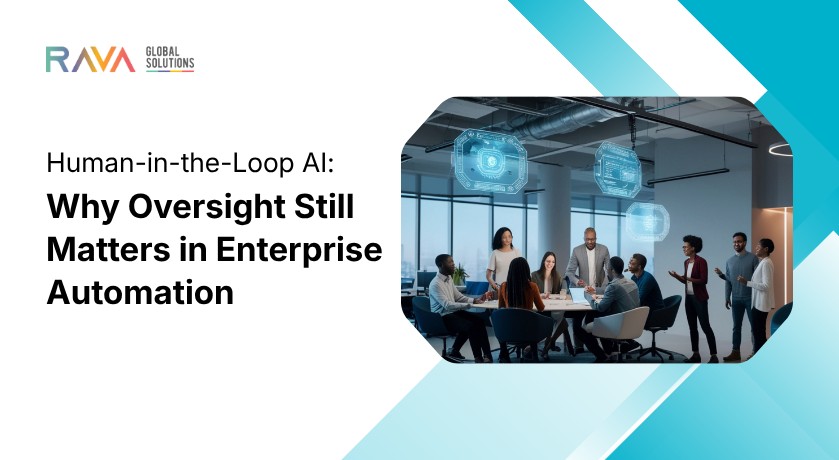
A single silent error in an automated system can halt business operations overnight. When autonomous models make decisions without supervision, small edge cases compound into massive financial, operational, and reputational liabilities. Many executive teams rush to eliminate human input completely, only to face unpredictable hallucinations, algorithmic bias, and broken customer trust.
True operational resilience requires a smarter balance. High-performing organizations integrate human judgement directly into algorithmic workflows to catch edge cases early. By deploying AI Automation Services with integrated oversight, organizations safeguard operations while accelerating digital transformation.
The True Cost of Unsupervised Enterprise Automation
Autonomous models process structured data with remarkable speed, yet they struggle with nuanced context. Recent industry benchmarks indicate that 68% of enterprise automated workflows encounter edge-case failures when left completely unattended. These blind spots trigger costly system downtimes, billing discrepancies, and regulatory investigations that damage enterprise reputation.
Modern machine learning systems rely on historical training data to forecast future outcomes. When market conditions pivot or unexpected variables emerge, unsupervised algorithms experience silent performance drift. Incorporating human review touchpoints keeps systems reliable, auditable, and aligned with core business priorities.
Autonomous Systems vs. Supervised AI Architectures
Selecting the right operating model depends on transaction value, regulatory exposure, and operational risk.
| Architecture Type | Decision Mechanism | Error Risk Profile | Enterprise Application |
|---|---|---|---|
| Fully Autonomous AI | Pure statistical inference with zero manual checks | High; silent drift and hallucination risks | Low-risk batch tasks and basic data sorting |
| Exception-Based Review | Automated paths with automated anomaly routing | Moderate; relies on rigid fallback rules | High-volume claims and tier-1 ticket routing |
| Human-in-the-Loop AI | Active collaboration and real-time oversight | Very low; continuous validation and feedback | High-stakes finance, legal, and clinical operations |
Core Pillars of Operational AI Governance
Establishing robust oversight requires a structured operational foundation rather than ad-hoc spot checks. Leading global organizations implement AI ethics and regulation ensuring responsible AI in business operations.
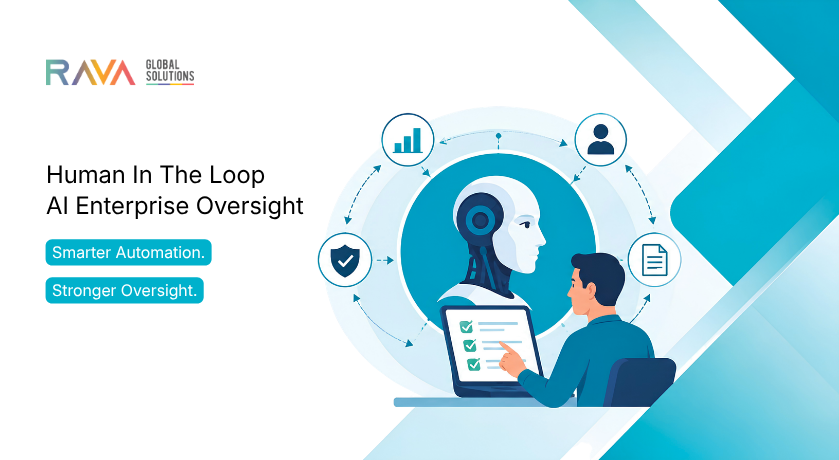
Dynamic Confidence Thresholds: Systems route transactions with certainty scores below specific thresholds to human specialists for manual validation.
Continuous Feedback Loops: Expert corrections actively retrain production models to eliminate repeated processing mistakes.
- Auditable Action Logs: Every automated inference and manual override remains fully logged for transparent internal review.
- Role-Based Review Queues: Specialized tasks reach qualified internal teams based on skill, security level, and domain expertise.
Practical Applications Across Critical Industries
Human-centered oversight transforms high-liability environments into reliable, scalable engines for growth.
- Commercial Lending and Underwriting: Algorithms extract structured financial records while credit officers evaluate complex, subjective risk indicators.
- Clinical Health Administration: Machine learning tools flag potential billing inconsistencies while certified specialists make final coverage determinations.
- Enterprise Supply Logistics: Predictive engines project regional inventory shifts while logistics directors negotiate volatile vendor agreements.
- Legal Contract Analysis: Natural language processors scan complex agreements while corporate counsel approves bespoke liability clauses.
Designing Scalable Workflows That Support Teams
Sustainable enterprise automation elevates human capabilities rather than creating friction in daily workflows. Forward-thinking companies utilize Human-Centred AI: Designing Systems That Empower, Not Replace to foster employee trust and adoption.
- Map Critical Decision Gates: Identify high-risk workflow intersections where an automated misstep causes severe financial or operational harm. In our enterprise implementations, we found that isolating the top 5% highest-risk decisions prevents over 90% of downstream system escalations.
- Establish Clear Escalation Rules: Define unambiguous confidence score boundaries that automatically separate straight-through processing from required human intervention. In our enterprise implementations, setting dynamic rather than static confidence thresholds reduced manual review workloads by 34%.
- Build Intuitive Specialist Interfaces: Equip human reviewers with transparent contextual summaries, model confidence indicators, and simple override tools. In our enterprise implementations, purpose-built validation screens cut review times in half while eliminating decision fatigue.
- Deploy Closed-Loop Training Cycles: Feed manual corrections directly back into development pipelines to continuously refine model precision over time. In our enterprise implementations, structured feedback pipelines lowered recurrent classification errors within two quarterly release cycles.
The Strategic Path Toward Responsible Innovation
Supervised automation is not a temporary safety net; it is the permanent architecture of modern business operations. Organizations that combine algorithmic processing speed with expert contextual awareness outperform competitors while minimizing operational liabilities. Building balanced, supervised systems protects balance sheets and preserves hard-earned market credibility.
RAVA Global Solutions designs and integrates resilient, governance-first automation architectures for modern global enterprises. Our consultative delivery models align advanced technology with your core operational objectives to drive long-term business performance. Partner with our specialist teams to build intelligent systems that scale securely with total confidence.
Frequently Asked Questions
What is the primary difference between human-in-the-loop and human-on-the-loop systems?
Human-in-the-loop systems require a human specialist to approve or modify a decision before the system executes an action. Human-in-the-loop systems allow the algorithm to execute actions autonomously, while a specialist monitors operations and intervenes only when anomalies arise.
How does supervised automation improve overall model accuracy?
Supervised workflows capture expert interventions and corrections as high-quality validation data. Engineering teams use these verified decision records to retrain and fine-tune models, progressively reducing edge-case failures and boosting predictive performance.
Does adding human oversight slow down enterprise operations?
No, structured oversight optimizes processing speed by allowing low-risk transactions to pass through instantly without friction. Only ambiguous, high-risk exceptions reach human queues, ensuring speed where possible and absolute accuracy where necessary.
Which business functions benefit most from human oversight?
High-liability departments including corporate compliance, fraud detection, credit underwriting, and clinical administration gain the highest return from supervised automation. These workflows involve complex regulatory rules and high-impact decisions that require human judgment.
How does human oversight support enterprise regulatory compliance?
Oversight architectures generate verifiable audit trails that detail why decisions were made and who validated each step. This transparency satisfies modern compliance mandates, including global algorithmic accountability guidelines and corporate risk management standards.
Next Steps
At RAVA Global Solutions, we help forward-thinking enterprises design, deploy, and scale dependable automation architectures. Connect with our engineering and strategy consultants today to operationalize responsible, high-performance systems built for long-term growth.