Quick Summary: Why Is ERP Process Standardization Critical?
ERP process standardization defines uniform, repeatable business operations across departments before software configuration begins. It eliminates operational waste, reduces expensive software customizations, and ensures company data flows cleanly through modern platforms like Odoo. Completing this step first lowers the risk of implementation failure by over 70%.
ERP process standardization defines uniform, repeatable business operations across departments before software configuration begins. It eliminates operational waste, reduces expensive software customizations, and ensures company data flows cleanly through modern platforms like Odoo. Completing this step first lowers the risk of implementation failure by over 70%.
Every growing company reaches a point where disconnected spreadsheets, legacy programs, and custom departmental habits create total chaos. Leadership often assumes that purchasing a modern Enterprise Resource Planning system will instantly fix these internal bottlenecks. Unfortunately, automating a broken process only produces automated confusion at a higher price tag.
Recent enterprise benchmark reports show that roughly 72% of digital platform rollouts experience major delays because teams attempt software migrations without first aligning their daily operations. When five regional branches manage purchase approvals in five separate ways, your engineering team must write complex, custom software code to satisfy everyone. This mistake causes budget blowouts, missed launch dates, and widespread user frustration.
Operational alignment acts as the essential foundation for any platform rollout. By standardizing core procedures early, your company establishes clear accountability and clean operational rules before writing a single line of software configuration.
The Hidden Cost Of Premature Software Configuration
Skipping operational prep work creates significant technical debt that burdens your organization for years. When internal teams do not agree on standard operational steps, developers must create intricate customizations to replicate inefficient departmental habits.
According to enterprise transformation data, over sixty-five percent of project budget overruns stem directly from unnecessary custom software modifications. These custom software additions make future platform upgrades difficult, expensive, and fragile. Furthermore, unaligned workflows prevent executive teams from viewing consolidated operational metrics across different business units.
Establishing clean operational rules creates organizational clarity before technical configuration starts. Clean procedures simplify user training, lower implementation consulting hours, and protect your long-term capital investment. Standard operating procedures turn your business software into a scalable asset rather than a continuous technical headache.
Legacy Workflows Versus Standardized Operations
Evaluating operational readiness helps leadership spot risks before signing large technology contracts. The comparison below illustrates how process alignment impacts every stage of your platform rollout.
| Evaluation Metric | Fragmented Legacy Operations | Standardized Process Architecture | Operational Business Impact |
|---|---|---|---|
| System Customization Level | Heavy custom coding (>40% modified code base). | Maximum out-of-the-box system utility (<10% modification). | Lowers deployment expenses and speeds up project delivery. |
| Data Integrity & Reporting | Disconnected data formats across departments. | Unified data fields and clear system metrics. | Delivers reliable, real-time executive decision data. |
| User Adoption Velocity | High resistance due to complex, clunky software screens. | Intuitive, predictable user paths across applications. | Speeds up daily employee proficiency and workflow speed. |
| Software Upgrade Agility | High risk of system breaks during annual version updates. | Fast, seamless migrations on standard release tracks. | Eliminates long-term technical debt and expensive support fees. |
Aligning internal operations transforms complex enterprise rollouts into predictable, manageable business projects. Investing early in operational clarity ensures that modern business software supports your operational goals instead of complicating them.
Core Pillars Of ERP Process Standardization
Successful enterprise deployments rely on methodical preparation across four foundational pillars of business. Focusing on these operational areas protects your project timeline and keeps technical execution on track.
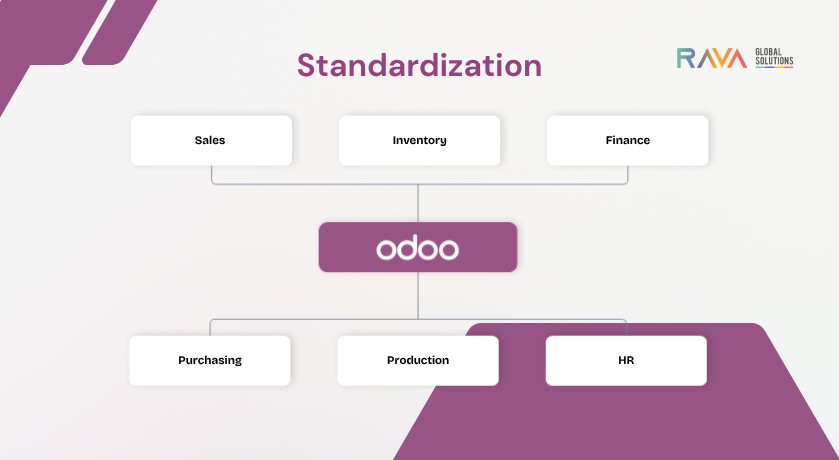
- Global Data Unification: Standardize item codes, vendor registries, and customer records across all operating units to maintain clean data integrity.
- Operational Role Definition: Establish clear approval hierarchies and task responsibilities so system permission levels match real-world accountability.
- Workflow Pruning: Eliminate redundant manual reviews and legacy paper handoffs before building automated paths inside your new software.
- Performance Metrics Alignment: Define consistent Key Performance Indicators across teams to ensure that company dashboards reflect unified corporate goals.
Five Steps For Optimizing Workflows Prior To Launch
Preparing your internal operations requires a structured, step-by-step roadmap that engages key team members without stalling daily business.
- End-to-End Mapping
- Bottleneck Identification
- Best Practice Benchmarking
- Governance Documentation
- Iterative Pilot Testing
Map Every End-to-End Operational Flow
Document how information and physical goods move across your departments, from initial customer inquiry to final revenue recognition. Engage front-line employees to capture daily realities rather than theoretical management charts.
Practitioner Insight: During field assessments, we frequently discover that department managers are unaware of up to thirty percent of the offline manual workarounds their teams use daily.
Identify and Eliminate Bottlenecks
Locate redundant approvals, duplicate data entry tasks, and operational delays across each documented flow. Remove legacy steps that fail to add measurable value for your end customers or to your financial reporting.
Practitioner Insight: Removing duplicate manual verification steps before software configuration routinely shortens order fulfillment cycles by several days.
Benchmark Workflows Against Native System Logic
Compare your operational steps directly against standard enterprise application flows. Adjust internal habits to align with native software functionality rather than demanding expensive, custom technical workarounds. Selecting experienced Odoo Implementation Services helps your organization adopt clean, out-of-the-box workflows with confidence.
Practitioner Insight: Companies that adapt their internal habits to native platform logic save an average of forty percent on total implementation costs.
Draft Clear Standard Operating Procedures
Write concise, step-by-step operating guidelines for every core business function across the company. Assemble cross-functional leaders by Building an ERP Implementation Team: Roles, Tools, and Timelines to champion these standard operating rules across every department.
Practitioner Insight: Creating short, visual workflow diagrams increases employee process compliance far better than dense, multi-page policy manuals.
Pilot and Refine Standardized Operations
Test standardized operational workflows within a single department before rolling them out enterprise-wide. Collect team feedback, measure task completion rates, and refine operating steps before configuring your production database.
Practitioner Insight: Early departmental pilots highlight hidden workflow gaps quickly, preventing operational disruptions during your final go-live phase.
Real-World Scenarios: From Fragmented Chaos To Operational Scale
The Industrial Manufacturer
A mid-sized industrial equipment manufacturer operated three production plants across different territories. Each plant used distinct naming conventions for raw inventory, separate vendor payment terms, and isolated spreadsheets for machine maintenance schedules.
When corporate leadership attempted an enterprise software rollout, software developers struggled to reconcile these conflicting operational habits. RAVA Global Solutions guided the manufacturer through a four-month operational alignment program before touching the production software.
The manufacturing leadership established uniform material codes, standardized purchase authorization limits, and created identical maintenance workflows across all three facilities. As a direct result, the business launched its unified enterprise platform two months ahead of schedule while reducing custom software development costs by fifty-five percent.
The Multi-Location Wholesale Distributor
A regional distributor with six regional distribution warehouses faced chronic inventory discrepancies and shipping delays. Warehouse teams relied on informal email requests and unrecorded verbal handoffs to transfer stock between locations.
Leadership recognized that rolling out new inventory software over unstandardized warehouse procedures would lead to increased operational errors. The company mapped its receiving, picking, packing, and cross-docking workflows into a single standardized playbook.
Standardizing warehouse processes before software setup allowed the team to adopt native system features smoothly. The business cut inventory write-offs by 40% within the first quarter after going live.
Managing Change And Overcoming Team Friction
Operational change frequently sparks anxiety among long-tenured staff who are accustomed to familiar daily routines. Employees often worry that new operational rules will slow down their output or limit their personal autonomy.
Proactive leadership addresses these valid concerns through transparent communication, active listening, and consistent executive sponsorship. Understanding underlying ERP Adoption Challenges: Why Your Team Resists Odoo and How to Fix It helps managers support hesitant team members with patience and clear guidance.
Early workflow standardization gives employees adequate time to master new operational routines before facing new software interfaces. Involving team members in the process design stage builds operational ownership, turning potential software skeptics into dedicated internal champions.
Practical Risk Management Checklist
Review this essential operational checklist before initiating technical software setup to protect your business timeline and budget.
- Executive Alignment: Leadership has approved single, unified operational paths across all operating facilities.
- Data Cleansing: Legacy customer, vendor, and product databases are fully de-duplicated and normalized.
- Documented Playbooks: Clear operating manuals exist for sales, purchasing, inventory, and financial accounting.
- Standard Approval Matrices: Authorization spending tiers and sign-off hierarchies are clearly defined and signed off.
- Customization Cap: Technical modifications are restricted to unique, revenue-generating business requirements.
Frequently Asked Questions
What is ERP process standardization?
ERP process standardization is the strategic practice of establishing uniform, repeatable business workflows across all company departments before implementing an enterprise software system. This approach creates consistent operational steps for common tasks such as purchasing, order processing, and financial accounting. Aligning these internal operations early minimizes expensive software customization, accelerates employee training, and ensures reliable, real-time business reporting.
Why should companies standardize processes before implementing an ERP system?
Standardizing business processes before software setup prevents companies from automating broken, inefficient operational habits. Modifying an enterprise software application to fit fragmented departmental routines increases development expenses, delays launch milestones and complicates future version upgrades. Early operational alignment ensures companies leverage out-of-the-box system capabilities, significantly lowering total cost of ownership.
How does process alignment improve user adoption rates?
Process alignment clarifies daily job responsibilities and workflow handoffs before employees encounter new software screens. When operational steps are clear and consistent, training programs become straightforward and intuitive. Employees experience far less operational anxiety because the software simply supports familiar, well-documented business steps rather than imposing sudden, confusing procedures.
What are the main risks of skipping workflow standardization?
Skipping workflow standardization results in extensive custom software development, severe project delays, budget overruns, and fragmented data reporting. Without uniform operational rules, different departments enter conflicting data, undermining the accuracy of executive reporting. These compounding technical issues often create system instability and trigger widespread employee resistance during software rollout.
How long does operational standardization typically take?
A thorough operational standardization initiative typically takes between eight and sixteen weeks, depending on business size and operational complexity. This timeframe allows organizations to map existing workflows, eliminate internal bottlenecks, harmonize data structures, and pilot standardized operating procedures. Investing this preparation time up front routinely saves several months of expensive technical rework during the actual software implementation.
Building Long-Term Agility Through Process Discipline
Sustainable business growth requires robust operational discipline paired with modern technology. Enterprise platforms deliver remarkable visibility and operational efficiency, but their success depends on the clarity of the underlying business processes.
Treating workflow alignment as an essential strategic prerequisite protects your project investment, lowers operational risk, and empowers your staff. Prioritizing ERP process standardization positions your organization to achieve smooth software rollouts, lower operational expenses, and build a truly scalable enterprise platform.
Ready To Standardize Your Operations For Sustainable Growth?
Navigating enterprise software rollouts requires steady guidance, deep technical expertise, and proven operational playbooks. Partner with RAVA Global Solutions to assess your core business workflows, eliminate operational friction, and implement modern enterprise systems designed to scale with your ambitions.