Managing a sprawling digital ecosystem often feels like keeping a massive fleet of ships moving in perfect unison. A single broken link in your communication chain can stall operations and cause costly, unexpected downtime. Recent enterprise research shows that 74% of organizations struggle with API maintenance due to poor lifecycle tracking. Poorly managed updates break existing integrations, frustrate development teams, and create severe security vulnerabilities across your network.
Quick Answer
Successful API versioning at scale requires a centralized governance model backed by automated contract enforcement. Enterprises must choose between URL, header, or query parameter versioning based on consumer needs. Implementing standard design patterns ensures backward compatibility, minimizes breaking changes, and preserves system stability across all cloud platforms.
Successful API versioning at scale requires a centralized governance model backed by automated contract enforcement. Enterprises must choose between URL, header, or query parameter versioning based on consumer needs. Implementing standard design patterns ensures backward compatibility, minimizes breaking changes, and preserves system stability across all cloud platforms.
Why Legacy API Control Fails Modern Enterprises
As digital ecosystems expand, keeping track of connection points becomes highly complex. Legacy integration frameworks lack the agility to manage modern cloud environments. Recent industry data shows that 63% of IT leaders experience severe delays caused by undocumented changes to software components. When multiple teams deploy updates independently, consistency suffers, and breaking changes slip into production environments unnoticed.
Without a unified design framework, organizations waste valuable technical resources fixing preventable errors. Teams create custom point-to-point connections rather than building reusable software components. This chaotic approach creates a fragile network that requires constant firefighting. Partnering with an experienced Best MuleSoft Partner USA helps businesses establish strict design standards that protect operational continuity.
Comparing Modern Versioning Strategies
Choosing the right versioning strategy requires balancing consumer convenience with backend maintenance costs. Different technical approaches suit different business architectures.
| Versioning Method | Best Used For | Key Advantage | Main Challenge |
|---|---|---|---|
| URL Path | Public API Portals | High Visibility | Rigid URL Structures |
| Custom Headers | Internal Microservices | Clean Endpoints | Complex Client Routing |
| Content Negotiation | Complex Data Systems | Maximum Flexibility | Difficult Cache Control |
Selecting a method shapes your long-term infrastructure. The right choice simplifies system updates and keeps your developers productive.
Enterprise API Governance in Action
Consider a global logistics provider handling millions of tracking requests daily. The engineering team needed to update their core shipment data structure without disrupting hundreds of external shipping partners. They initially attempted to deploy immediate, unannounced changes to their live endpoints. This sudden shift broke compatibility for 40% of their active clients, halting operations for several hours.
To resolve this crisis, the company worked alongside top MuleSoft Consulting Services to overhaul its release strategy. They adopted a strict semantic versioning policy and introduced an automated deprecation timeline. This structured transition allowed clients to migrate to the new endpoints at their own pace. Consequently, the company eliminated unexpected downtime and maintained a reliable system architecture.
Core Pillars of Scalable API Governance
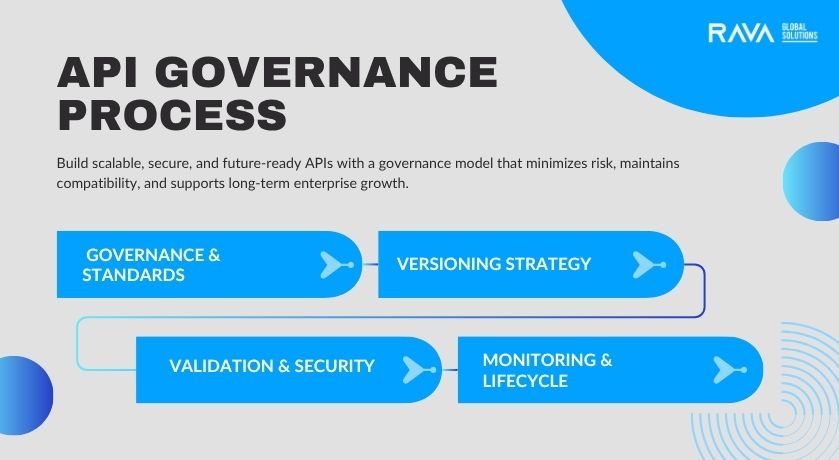
Robust oversight turns chaotic developer environments into orderly, highly predictable delivery systems. True platform scalability relies on three foundational pillars:
- Automated Design Validation: Use centralized rule sets to check configurations before deployment.
- Unified Discovery Portals: Maintain a single source of truth where developers can find approved components.
- Proactive Security Scanning: Automatically check every entry point for active vulnerabilities and compliance issues.
Implementing these practices helps teams build a resilient digital foundation. Organizations can comfortably manage complex API governance in multi-cloud environments without slowing down engineering momentum.
Maximizing the Value of Integration Assets
Long-term business agility requires shifting from project-based coding to asset creation. Treat every interface as a reusable product designed for long-term utility.
- Clear Deprecation Windows: Give your consumers at least six months’ notice before retiring old versions.
- Comprehensive Live Documentation: Provide interactive testing environments and accurate code samples for every asset.
- Strict Backward Compatibility: Design data models defensively to avoid breaking existing customer integrations.
Adopting this mindset helps your business create a highly stable ecosystem. A clear, reusable API portfolio strategy reduces development costs and accelerates your digital transformation goals.
Strategic Evolution With RAVA Global Solutions
Navigating complex platform integration requires practical experience and great technical skill. RAVA Global Solutions provides the strategic guidance needed to modernize your enterprise integration architecture. Our team helps you build clear versioning models that eliminate technical debt and keep your systems secure. Protect your digital investments and ensure seamless application performance with a trusted Best MuleSoft Service Provider USA.
Frequently Asked Questions
What is the best API versioning strategy for enterprise ecosystems?
URL path versioning is generally best for large enterprise ecosystems due to its clear visibility and simple routing. It allows external partners to identify the correct endpoint version quickly. However, internal microservices often benefit from custom header versioning to keep URLs clean.
How does API Governance prevent breaking changes in production?
A strong framework enforces strict contract testing and automated validation checks before deployment. It ensures that any update modifying mandatory fields or data formats is flagged before it affects live clients.
When should an enterprise deprecate an older API version?
Deprecation should occur when an older version poses security risks or becomes too expensive to maintain. Enterprises must provide clear usage metrics and notify consumers at least six months before shutting down an endpoint.
Why is semantic versioning important for cloud integration?
Semantic versioning uses a clear three-number format to convey the exact nature of a software update. This system alerts developers instantly whether a change is a minor bug fix or a major modification.
How do consulting services accelerate API lifecycle management?
Experienced consultants provide proven architecture templates, automated testing workflows, and tailored governance models. This expertise helps internal teams avoid common design mistakes and speeds up time-to-market.