Quick Summary: What Is Modern Clinic Management Software?
Modern Clinic Management Software is an integrated digital platform that automates patient scheduling, electronic health record management, diagnostic workflows, and medical billing. By replacing fragmented manual administration with a centralized cloud architecture, healthcare facilities eliminate scheduling friction, reduce administrative overhead, ensure regulatory compliance, and significantly improve the overall patient experience across all care-delivery touchpoints.
Modern Clinic Management Software is an integrated digital platform that automates patient scheduling, electronic health record management, diagnostic workflows, and medical billing. By replacing fragmented manual administration with a centralized cloud architecture, healthcare facilities eliminate scheduling friction, reduce administrative overhead, ensure regulatory compliance, and significantly improve the overall patient experience across all care-delivery touchpoints.
The Hidden Cost of Fragmented Practice Systems
Running a modern medical facility requires balancing exceptional patient care with complex administrative demands. Across the healthcare industry, administrative burden accounts for nearly thirty percent of total operating expenses in outpatient practices. Paper charts, isolated booking systems, and manual billing create operational friction that slows down daily routines. Front-desk staff lose valuable hours transferring data between incompatible platforms, while clinical teams waste energy hunting down missing patient histories.
When patient records exist in separate silos, staff burn out quickly and critical clinical details slip through the cracks. In early 2026, medical research showed that sixty-two percent of patient scheduling errors stem directly from disconnected software tools. Furthermore, double-booking, billing delays, and lost charts strain practice margins while eroding patient trust. Healthcare decision-makers must treat administrative efficiency as a core clinical priority rather than a secondary back-office task.
Transitioning to unified digital infrastructure changes how medical practices manage daily care delivery. Implementing smart clinic management software creates a seamless connection between patient intake, diagnostic documentation, and insurance billing. Automated workflows reduce manual touchpoints, allowing your clinical team to focus on direct patient care. As a result, medical facilities protect their operating margins while building a foundation for long-term practice growth.
Comparing Legacy Systems Against Unified Digital Infrastructure
Legacy administrative methods force staff to manage separate databases, leading to data errors and delayed billing cycles. Modern platforms centralize operational metrics across departments into a single secure interface.
| Operational Feature | Legacy Administrative Methods | Modern Enterprise Digital Systems | Strategic Practice Impact |
|---|---|---|---|
| Patient Record Access | Manual paper retrieval across physical archives | Real-time encrypted digital health access | Cuts consultation prep time by 45% |
| Appointment Scheduling | Phone booking with manual calendar entry | Automated multi-channel patient portals | Lowers missed appointments by 35% |
| Revenue Cycle Operations | Manual claim creation with high error rates | Integrated electronic billing and claims | Accelerates claim payment by 14 days |
| Inventory Management | Periodic physical stock counts | Real-time supply tracking and automated orders | Eliminates critical medication shortages |
| Compliance & Audit | Vulnerable physical files and fragmented logs | Automated audit trails with role access | Ensures full data privacy compliance |
Essential Features Every Modern Practice Requires
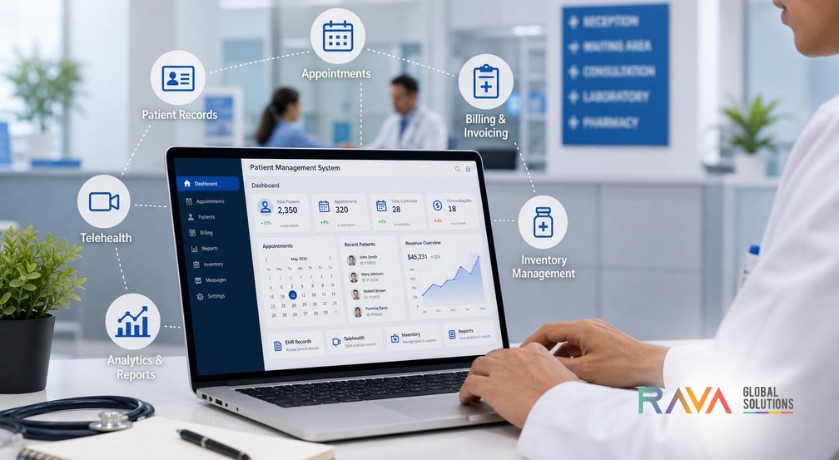
High-performing medical practices rely on integrated modules that handle everyday tasks cleanly. Investing in complete digital platforms gives teams the tools needed for smooth daily operations:
- Centralized Electronic Health Records: Store full patient histories, prescriptions, and diagnostic lab reports inside a secure digital vault.
- Automated Appointment Dispatch: Allow patients to book appointments online 24 hours a day and send automated reminders to reduce missed visits.
- Integrated Revenue Cycle Management: Process insurance claims and digital patient payments directly through unified invoicing interfaces.
- Pharmacy and Inventory Tracking: Monitor medication stocks in real time to prevent shortages of critical clinical supplies.
- Secure Telehealth Integration: Conduct remote consultations safely using encrypted video platforms connected directly to patient charts.
Step-by-Step Implementation Framework for Medical Practices
- Map Operational Workflows: Document your current administrative processes to spot bottlenecks in patient intake, clinical notes, and billing. Practitioner Insight: In our enterprise deployments at RAVA Global Solutions, we found that mapping patient movement before installation reduces software onboarding delays by 40%.
- Clean and Migrate Data: Audit existing records to remove duplicate files before moving active patient data to the new system. Practitioner Insight: Cleaning demographics prior to migration prevents chart duplications and keeps medical records clear.
- Configure Custom Modules: Adjust intake forms, consultation templates, and billing rules to match your specific medical specialties. Practitioner Insight: Tailoring intake screens for clinical specialties saves providers more than 2 minutes per patient visit.
- Train Staff and Launch: Conduct interactive training sessions for front-desk staff and clinicians using safe simulation environments. Practitioner Insight: Running legacy and digital systems together for three days ensures zero downtime during full go-live transitions.
Real-World Practice Transformations
Multi-Specialty Outpatient Center
A growing multi-specialty clinic struggled with long check-in queues and high appointment no-show rates. Front-desk staff spent hours confirming bookings by phone while patients waited in crowded reception areas. By upgrading to an integrated system, the facility automated appointment reminders and enabled online intake forms. Patient wait times dropped by 35% within 90 days, while appointment no-shows decreased significantly.
Surgical Practice Network
A regional surgical practice faced frequent inventory mismatches and delayed insurance payouts. Paper charts made it difficult to track surgical supply usage, leading to rejected claims and missing inventory. Adopting automated tracking linked to digital charts transformed their operations. The practice reduced inventory waste by 22% and shortened its billing cycle by 2 full weeks.
Strategic Evaluation Criteria for Healthcare Leaders
Selecting the right administrative framework requires balancing immediate operational needs with long-term technology goals when choosing clinic management software.
Off-the-shelf software applications offer quick basic setups, fixed feature sets, and predictable recurring licensing fees. However, off-the-shelf tools often restrict practice growth as your patient volume expands.
Conversely, enterprise custom systems provide scalable modular architecture, custom clinical workflows, and seamless multi-location connectivity. Custom enterprise solutions allow growing facilities to scale administrative modules as patient volume increases. Working with experienced technology specialists ensures your practice builds a secure platform tailored to actual daily workflows. RAVA Global Solutions provides expert enterprise system architecture, helping healthcare teams replace fragmented tools with reliable digital systems.
Core Capabilities That Drive Practice Efficiency
Modern platforms streamline daily operations across every department in your medical facility:
- Digital Patient Onboarding: Enable patients to complete registration forms on mobile devices before arriving at the clinic.
- Automated Claim Validation: Verify insurance eligibility instantly before consultations to prevent claim denials and unexpected bills.
- Multi-Location Synchronization: Connect multiple practice branches under one central database to share patient records effortlessly.
- Custom Clinical Templates: Create specialty-specific consultation notes that help physicians chart patient visits faster.
- Real-Time Analytics Dashboards: Track key operational metrics like daily patient counts, revenue performance, and room utilization rates.
Navigating System Adoption Without Disrupting Care
Upgrading clinical infrastructure often raises concerns about operational downtime and staff resistance. Transitioning to modern systems does not require halting daily medical operations. Planning your rollout in phases keeps clinical routines running smoothly as teams adapt to new workflows.
Staff adoption increases when leadership introduces digital tools through clear, practical training modules. Demonstrating how automated scheduling cuts repetitive phone calls helps front-desk teams embrace new technology quickly. Furthermore, providing clinicians with streamlined charting templates delivers immediate value by reducing after-hours documentation time.
Data security remains top of mind during any digital transition. Modern cloud architecture safeguards sensitive patient information using advanced encryption, granular access controls, and automated backups. Choosing a proven technology partner ensures your practice stays compliant with evolving health data regulations while maintaining unbroken care delivery.
Frequently Asked Questions
What is Clinic Management Software used for in healthcare practice?
It automates practice operations such as patient scheduling, electronic health record management, diagnostic tracking, and insurance billing. Centralizing these core functions on a single digital platform reduces administrative costs, reduces data entry errors, and improves the quality of patient care.
How does unified software lower appointment no-show rates?
Unified software sends automated SMS and email reminders directly to patients before scheduled visits. Patients can confirm or reschedule appointments with one click, helping clinics fill open time slots and keep daily schedules full.
Can custom software integrate with existing laboratory tools?
Modern enterprise platforms connect easily with external diagnostic labs, imaging systems, and payment gateways using secure APIs. Automated data sharing eliminates manual entry errors across clinical departments.
Is cloud-based patient management software secure and compliant?
Yes, cloud platforms protect patient data using end-to-end encryption, multi-factor authentication, and strict user permissions. These built-in security controls meet global data privacy standards, keeping sensitive medical information safe.
How long does software implementation take for a medical clinic?
Implementation timelines range from 4 to 12 weeks, depending on clinic size, data volume, and customization needs. Phased rollouts and thorough staff training ensure your clinic transitions smoothly without interrupting daily patient care.
Partner with RAVA Global Solutions to streamline your administrative workflows. Book a consultation with our technology team today to evaluate your practice needs and explore modern enterprise solutions.