Quick Summary
Strategic ERP modernization updates core enterprise software while protecting daily workflow continuity. By pairing modular architecture with professional Odoo Implementation Services, growing companies systematically replace legacy bottlenecks. This phased migration approach eliminates costly operational downtime, secures data integrity, and delivers measurable ROI across every business department without interrupting active customer operations.
Strategic ERP modernization updates core enterprise software while protecting daily workflow continuity. By pairing modular architecture with professional Odoo Implementation Services, growing companies systematically replace legacy bottlenecks. This phased migration approach eliminates costly operational downtime, secures data integrity, and delivers measurable ROI across every business department without interrupting active customer operations.
Navigating ERP Modernization Risks In Modern Operations
Upgrading enterprise resource planning systems often feels like swapping an engine during mid-flight. Legacy infrastructure creates real friction, yet leaders routinely delay upgrades for valid operational reasons. Recent 2026 enterprise software reports reveal that 64% of legacy ERP migrations experience severe delays due to unmanaged workflow friction.
Outdated legacy platforms drain productivity through disconnected data silos and slow manual entry. Enterprise teams waste valuable hours reconciling conflicting reports across disconnected operational channels. Attempting a complete system overhaul overnight frequently disrupts inventory tracking, delays client billing, and strains customer relationships.
Organizations achieve operational balance by choosing phased rollouts over risky legacy replacement methods. Modernizing business systems requires a clear blueprint that protects ongoing commercial output. With tailored digital transformation with Odoo, companies upgrade legacy tools systematically while maintaining uninterrupted service delivery for their clients.
Core Pillars Of Smooth ERP System Transition
Successful software modernization relies on structural execution rather than sudden operational shifts. Enterprise leaders must focus on clear architecture to minimize friction across active business units.
- Comprehensive Workflow Mapping: Documenting existing processes isolates operational dependencies before software deployment. Identifying workflow bottlenecks early prevents the migration of broken business logic into your updated system ecosystem.
- Phased Data Sanitization: Cleaning legacy data sets ensures high data integrity across your modern infrastructure. Eradicating redundant records prior to ingestion protects downstream reporting tools from analytical errors.
- Role-Based Training Modules: Tailoring software education to specific department tasks boosts user confidence. Focused operational exercises prevent productivity drops during active system cutover periods.
- Parallel Testing Environments: Running legacy and modern platforms side by side validates real-world transaction accuracy. Live system verification catches functional variances before full production release.
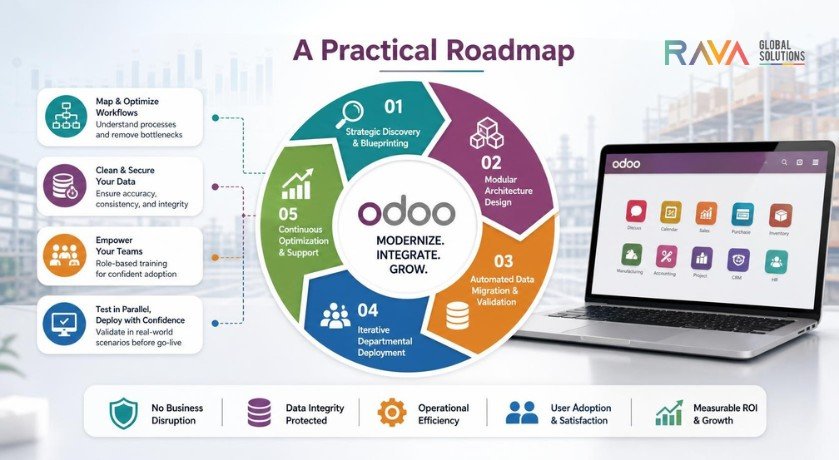
Step-By-Step System Implementation Framework
Executing a successful platform transition requires structured phases that protect core operational stability. Enterprise teams move through distinct implementation gates to guarantee measurable software success.
- Strategic Discovery and Blueprinting: Define key operational performance metrics while establishing strict project boundaries. In our enterprise implementations, we found that mapping business processes to native workflows reduces the need for custom code by 40%.
- Modular Architecture Design: Configure core enterprise modules to match prioritized business requirements. Practitioner insight confirms that deploying central financial accounting tools first establishes a reliable foundation for complex supply chain configurations.
- Automated Data Migration and Validation: Extract, clean, and map legacy business records into structured platform environments. Advanced validation scripts automatically catch format discrepancies before real data populates live transactional databases.
- Iterative Departmental Deployment: Roll out functional software modules sequentially across target enterprise units. Gradual system cutovers enable operational teams to master new interfaces without compromising client delivery schedules.
- Continuous Optimization and Support: Review platform performance metrics regularly to optimize business workflow efficiency. Ongoing application monitoring ensures long-term operational success while driving sustained software return on investment.
Real-World Scenarios: Driving Operational Excellence Across Industries
Industrial Manufacturing Deployment
A mid-sized industrial manufacturer faced severe inventory delays due to aging desktop software. Their legacy database frequently desynchronized, leading to stockouts and missed shipment deadlines. By partnering with RAVA Global Solutions to implement modular inventory tools, they connected plant operations directly with purchasing departments. Real-time tracking eliminated stock inaccuracies within ninety days of operational go-live.
Regional Logistics Expansion
A growing logistics distributor struggled with manual billing across multiple regional hubs. Disconnected accounting applications created massive revenue leakage and delayed monthly financial reporting cycles. Transitioning to integrated financial software streamlined cross-departmental invoicing while maintaining uninterrupted order fulfillment. Automated payment matching reduced accounts receivable processing time by half.
Ensuring Sustainable Enterprise Scalability
System modernization does not end when initial software configuration goes live. Long-term platform utility requires clear governance models that adapt to shifting industry demands. Companies must establish ongoing evaluation metrics to catch operational friction early. Routine system audits keep enterprise workflows aligned with broader business growth objectives.
Leveraging expert consultation helps protect your technical assets from performance degradation. Professional maintenance routines help keep database speeds up as transactional volumes grow over time. Working alongside experienced system architects guarantees continuous updates without disrupting established operational habits. Securing specialized guidance ensures your platform evolves seamlessly as enterprise challenges emerge.
Enterprise leaders who invest in professional software planning consistently secure long-term operational advantages. Building an adaptable digital foundation equips your business to handle market shifts with ease. Establishing a strong technical architecture today protects organizational agility and drives sustained commercial profitability for years to come. Investing in dedicated software management ensures long-term Odoo success across your entire enterprise.
Frequently Asked Questions
How do professional Odoo implementation services prevent business operational downtime?
Professional deployment strategies use phased, modular rollouts to update software components incrementally. By running parallel testing environments and staging data migrations, active departmental operations continue without disruption while new features undergo validation.
What causes most ERP modernization projects to fail or run over budget?
ERP projects primarily fail due to unmanaged scope growth, poor legacy data cleanup, and inadequate user training. Omitting thorough process mapping early leads to heavy custom code requirements, delaying deployments and inflating overall transformation costs.
How long does a typical phased Odoo software transition take?
A standard enterprise migration takes between three to nine months depending on operational complexity. Phased rollouts deliver working software modules within ninety days, allowing businesses to capture functional value while downstream features are configured.
Can custom legacy software integrate directly into modern Odoo ecosystems?
Modern enterprise platforms use robust API frameworks to connect securely with legacy custom applications. Experienced implementation teams build custom connectors that mirror real-time data between active legacy tools and new operational environments.
Why is modular software deployment safer than traditional legacy replacement?
Modular deployment breaks system modernization into manageable departmental steps rather than risking total operational cutovers. Isolating changes allows teams to validate specific business functions independently, significantly lowering enterprise risk profiles.
Modernizing enterprise software infrastructure does not require accepting operational downtime or organizational risk. By partnering with RAVA Global Solutions for expert Odoo Implementation Services, your organization gains a clear, phased roadmap that protects daily operations while driving sustainable growth.