Quick Summary
An AI-Ready ERP is an enterprise platform built on clean, standardized business processes and unified data architecture. Deploying artificial intelligence on top of broken workflows creates rapid operational noise rather than efficiency. True ERP modernization requires streamlining underlying operational routines first, ensuring artificial intelligence models receive reliable inputs to drive real enterprise value.
An AI-Ready ERP is an enterprise platform built on clean, standardized business processes and unified data architecture. Deploying artificial intelligence on top of broken workflows creates rapid operational noise rather than efficiency. True ERP modernization requires streamlining underlying operational routines first, ensuring artificial intelligence models receive reliable inputs to drive real enterprise value.
Why Machine Learning Projects Fail In Unprepared Enterprise Systems
Enterprise leaders face immense pressure to adopt artificial intelligence tools across daily business operations. However, recent 2026 enterprise technology benchmark reports show that 74% of corporate machine learning initiatives fail to deliver measurable ROI due to poor underlying data and broken operational steps. Deploying advanced intelligence software on top of fragmented workflows simply speeds up existing operational errors.
When core business units rely on manual workarounds, custom offline spreadsheets, or inconsistent data entries, artificial intelligence algorithms lose accuracy instantly. Modern enterprise systems require predictable inputs to recognize patterns, automate approval chains, and forecast supply demand. Enterprise teams must focus on fixing structural workflow friction before purchasing expensive software add-ons or intelligent agents.
Businesses that prioritize process hygiene achieve faster digital transformation outcomes with far lower capital risks. Streamlining core routines eliminates duplicate steps and cleanses operational records automatically. Establishing this solid foundation transforms enterprise software into a reliable backbone that supports scalable, intelligent decision-making across every department.
Traditional Enterprise Upgrades vs. Process-First AI ERP Modernization
| Strategic Dimension | Traditional ERP Upgrade | Process-First Modernization |
|---|---|---|
| Primary Goal | Feature adoption and technical lift-and-shift | Workflow hygiene, data unity, and speed |
| Data Quality Focus | Post-migration cleanup and manual fixes | Real-time validation at point-of-entry |
| System Adaptability | Rigid, heavily customized legacy code | Flexible architecture ready for Why Odoo Is Well-Suited for AI-Augmented Business Processes |
| Operational Impact | High maintenance costs and static reporting | Predictive insights and automated routines |
Four Steps To Prepare Core Business Processes For Enterprise AI
Map And Standardize Cross-Departmental Workflows
Begin by documenting every manual touchpoint across procurement, inventory, finance, and order fulfillment. Unify conflicting departmental methods into single, repeatable standard operating procedures.
Practitioner Insight: In our enterprise implementations, we found that normalizing approval hierarchies before software configuration reduced post-go-live exception tickets by over 60%.
Consolidate Operational Data Into A Single Source Of Truth
Eliminate duplicate software tools and offline spreadsheets that isolate critical business information. Migrate department data into a unified, modular platform like Odoo Implementation Services to maintain consistent data structures across the organization.
Practitioner Insight: Removing third-party database connectors in favor of a native, single-database architecture immediately increased data processing accuracy for automated financial reconciliations.
Enforce Automated Input Validation Rules
Configure explicit system rules that block incomplete or improperly formatted data at entry. Prevent field operators from bypassing mandatory inputs to ensure continuous data cleanliness.
Practitioner Insight: Establishing automated validation checks on incoming purchase orders eliminated downstream inventory discrepancies for a regional distribution client within thirty days.
Scale Operations With Intelligent API Integrations
Connect external supply chain partners, customer portals, and internal tools through secure, standard interfaces. Ensure your infrastructure supports seamless integration by reviewing strategies for Future-Proofing Operations with Odoo: Preparing Your ERP for AI, APIs, And Scale.
Practitioner Insight: Building lightweight API connections rather than heavy custom code scripts allowed our clients to upgrade core software modules without breaking intelligent automation triggers.
Real-World Scenarios: Fixing Process Friction Before AI Deployment
Resolving Inventory Forecasting Errors In Distribution
A mid-sized logistics provider struggled with stock shortages despite deploying predictive inventory algorithms. The underlying issue stemmed from warehouse staff recording physical stock updates on paper logs before weekly manual batch entries. RAVA Global Solutions restructured their receiving workflow into direct mobile barcoding routines, providing clean, real-time stock data that instantly restored forecasting accuracy.
Eliminating Invoice Approval Bottlenecks In Manufacturing
A manufacturing firm attempted to automate accounts payable using machine learning document processing. However, conflicting approval rules between procurement and accounting caused the system to stall constantly. By standardizing matching logic and centralizing purchase order rules first, the company successfully automated 85% of vendor invoice processing without manual intervention.
Frequently Asked Questions
What makes an ERP truly AI-ready?
An ERP becomes AI-ready when underlying business processes are fully standardized, well-documented, and integrated within a unified database structure. Clean input data allows algorithms to extract actionable insights and automate complex decisions reliably without human intervention.
Why do AI features fail in legacy ERP setups?
AI features fail in legacy systems primarily due to siloed databases, inconsistent user data entry, and unstandardized operational routines. Intelligent software models require structured, high-quality data streams to generate accurate predictions and prevent automated operational errors.
Should we clean business processes before or during ERP implementation?
Business processes should always be evaluated and streamlined prior to or during the initial phase of software configuration. Configuring enterprise software around outdated or broken workflows bakes inefficiency directly into the new digital infrastructure.
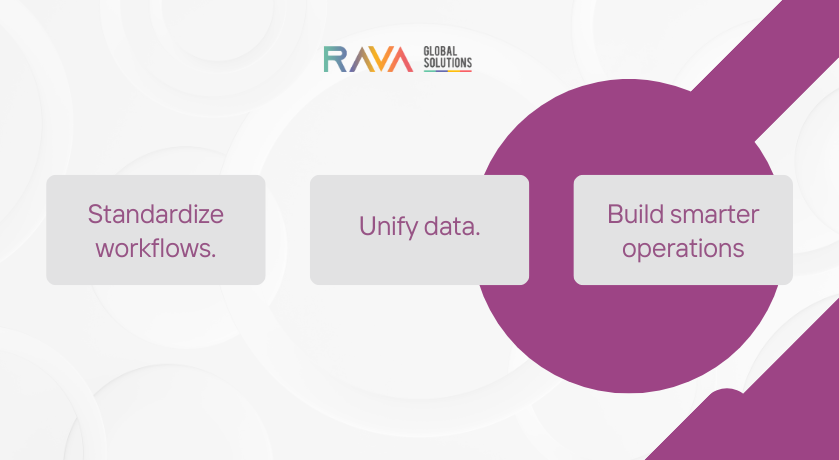
Building an AI-Ready ERP requires a relentless focus on process hygiene, data unity, and operational clarity. Companies that fix underlying workflow friction today unlock genuine automation, scalable efficiency, and long-term commercial advantage tomorrow.