Quick Summary: What Is Enterprise Integration Modernization?
Enterprise Integration Modernization is the strategic overhaul of legacy connectivity architectures into decoupled, API-led ecosystems. This transition replaces brittle point-to-point connections with reusable digital assets. It enables seamless hybrid cloud synchronization, real-time data flow, and automated operational workflows across legacy mainframes and modern platforms.
Enterprise Integration Modernization is the strategic overhaul of legacy connectivity architectures into decoupled, API-led ecosystems. This transition replaces brittle point-to-point connections with reusable digital assets. It enables seamless hybrid cloud synchronization, real-time data flow, and automated operational workflows across legacy mainframes and modern platforms.
Modern enterprise IT leaders face an unprecedented operational scalability crisis driven by outdated architecture. Legacy point-to-point connections devour up to 70% of enterprise IT budgets on basic maintenance. Chief Information Officers must pivot toward agile digital ecosystems to preserve velocity and market edge. Modernizing your connectivity footprint eliminates structural bottlenecks, lowers operational friction, and unlocks active business value.
Recent global technology benchmark reports show that 84% of enterprise leaders experience severe digital delays due to integration friction. Outdated connections create massive data silos that slow product rollouts and compromise customer experiences. Unifying your enterprise platforms transforms static legacy infrastructure into a flexible engine for continuous innovation. Enterprise Integration Modernization gives leadership teams the visibility needed to scale digital capabilities across all business units.
The Hidden Crisis in Enterprise Connectivity
Legacy software ecosystems often resemble web-like structures of undocumented custom code built over decades. Every new cloud application adds layers of complexity to these fragile core database environments. System administrators spend hundreds of hours manually testing basic software patches to prevent unexpected failures. This defensive operational model consumes valuable engineering resources that should drive revenue growth.
Custom scripts fail to provide the real-time throughput required by modern enterprise operations. When one legacy endpoint fails, dependent upstream workflows halt instantly across multiple departments. Business leaders encounter delayed financial reporting, inventory errors, and fragmented customer profiles across digital channels. Addressing these structural vulnerabilities requires a fundamental shift in how applications share critical information.
Legacy Architecture Versus API-Led Connectivity
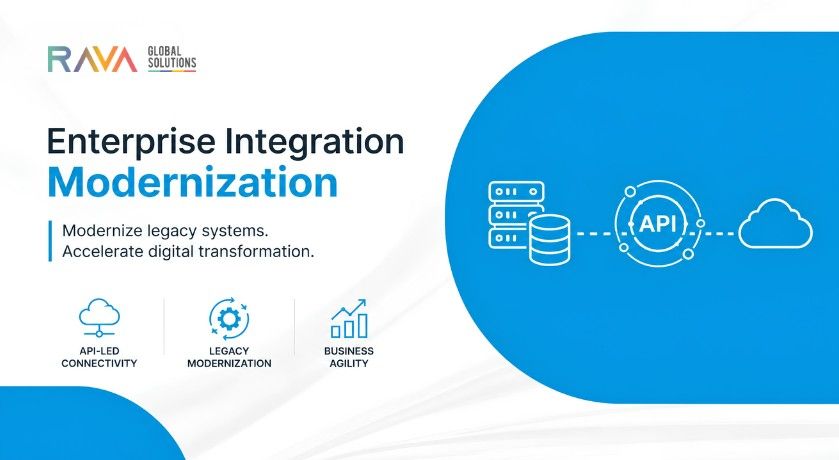
Traditional connectivity relies on direct database queries that lock up core enterprise systems. API-led connectivity breaks these monolithic dependencies into three distinct, reusable application layers.
| Integration Metric | Legacy Point-to-Point Architecture | Modern API-Led Connectivity |
| Architecture Pattern | Direct custom scripts and database links | Tiered System, Process, and Experience APIs |
| Maintenance Overhead | High cost per application endpoint | Centralized platform monitoring and control |
| Data Reusability | Zero reusability across projects | High asset reuse across business units |
| Deployment Velocity | Months required for new connections | Days via standardized interface endpoints |
| Security Perimeter | Hardened manually per connection | Universal policy enforcement at gateway level |
Transitioning to modern frameworks requires evaluating how data flows across operational layers. Organizations that adopt From Legacy to Modern: How MuleSoft Accelerates IT Modernization systematically eliminate architectural complexity while increasing agility. Building standardized connectivity frameworks ensures long-term operational viability across complex corporate landscapes.
Establishing an API-led foundation protects your core records while giving front-end teams freedom to innovate. Developers access approved data endpoints without waiting for back-end database adjustments or manual security grants. This decoupled model turns integration from a bottleneck into a repeatable strategic advantage. Modern enterprises scale rapidly because their underlying software assets talk to each other effortlessly.
Strategic Imperatives for Modern Infrastructure
Digital transformation demands seamless alignment between business objectives and technical capability. Modernizing your integration layer enables real-time decisions, automated governance, and hybrid cloud operations.
- Standardized interfaces abstract back-end complexity from front-end consumer applications.
- Centralized API management provides complete visibility into data access and metric usage.
- Event-driven architecture triggers instant actions when critical business events occur.
- Modular design allows seamless replacement of underlying software without downtime.
Upgrading your application framework enables continuous evolution without disrupting active business operations. Teams deploy updates to individual services without risking wide system outages or data corruption.
Building a flexible digital foundation empowers your workforce to respond instantly to shifting market demands. Legacy systems become valuable data sources rather than obstacles to ongoing corporate growth.
Architectural Bottlenecks Hindering Scale
Unstructured integration of growth without governance generates systemic risk across technical ecosystems. Outdated custom code limits business expansion and drains vital engineering talent away from core innovation projects.
- Core mainframes lack native interface capabilities for modern cloud platforms.
- Fragile custom integrations break during routine vendor security updates.
- Decentralized data access obscures transaction tracking and audit compliance.
- Monolithic platforms stall feature updates and slow critical business initiatives.
Resolving deep structural friction clears the path for sustainable, long-term enterprise expansion. Leaders must evaluate how Integration Technical Debt: Why It Slows Digital Transformation restricts developer productivity and inflates operational budgets. Removing these barriers enables engineering teams to ship high-impact features faster and more reliably.
Unifying your application network reduces annual software maintenance costs by up to 45% within 18 months. Clean interfaces allow effortless onboarding of modern cloud platforms without disturbing sensitive core systems. Organizations build lasting resilience by converting fragile custom links into secure, managed digital services.
Financial and Operational Impacts of Technical Debt
Carrying technical debt in your integration layer creates invisible revenue loss every single day. Engineering teams waste up to 40% of their working hours maintaining custom interfaces and repairing broken scripts. This operational drag delays critical strategic launches, giving competitors a clear market advantage. Over time, the cost of maintaining legacy links exceeds the investment required for full modernization.
High integration complexity also increases corporate cybersecurity exposure across all digital touchpoints. Unmanaged point-to-point connections create hidden backdoors that bypass centralized security policy checks. Modernizing your application network enforces consistent security governance and encryption standards across all data exchanges. Protecting enterprise assets requires eliminating unmonitored scripts and securing every interface endpoint.
Implementing Enterprise Integration Modernization Step by Step
Successful digital transitions demand structured execution that minimizes operational risk while delivering early business value. Following a systematic methodology ensures smooth enterprise alignment across technical and business leadership.
Map Core Systems and Identify High-Risk Dependencies
Catalogue all existing endpoints, custom scripts, and database connections across the IT landscape. Map critical business processes against legacy applications to evaluate technical risk profiles and operational priority.
In our enterprise implementations, we found that mapping dependencies uncovers hidden single points of failure before code deployment.
Establish Centralized API Governance Standards
Define universal security policies, protocol requirements, and design templates for enterprise applications. Centralized rules enforce consistency while maintaining data protection across hybrid cloud environments.
In our enterprise implementations, we found that establishing design standards early prevents architecture fragmentation and accelerates long-term team adoption.
Deploy Universal Interface Layers
Build reusable system layers over core enterprise databases and legacy mainframe hardware. Standardizing system interfaces insulates mission-critical databases from high-volume front-end traffic spikes.
In our enterprise implementations, we found that decoupling back-end systems protects core platforms during unexpected user traffic surges.
Automate CI/CD Delivery Pipelines
Implement automated testing and deployment workflows for all integration assets across all environments. Continuous validation ensures rapid code delivery without compromising operational stability or security boundaries.
In our enterprise implementations, we found that automating delivery pipelines cuts integration release cycles from weeks to minutes.
Partnering with experienced architects streamlines complex technical transitions across your organization. Engineering groups leveraging MuleSoft Consulting Services accelerate transformation timelines while maintaining continuous business availability. Expert guidance helps avoid common migration traps and maximizes your long-term platform value.
Establishing automated delivery pipelines gives your development teams instant feedback on software performance and reliability. Automated regression testing catches potential integration errors before they impact live production systems. This rigorous operational discipline builds confidence across executive leadership and end-user business teams alike. Modern delivery practices transform software releases into routine, low-risk operational events.
Real-World Scenarios: Enterprise Transformation Proof
A global manufacturing enterprise struggled with delayed inventory updates across 40 fulfillment hubs worldwide. Their legacy environment relied on batch scripts running over nightly database file transfers. Orders failed frequently during peak shopping periods, causing inventory inaccuracies and frustrated corporate customers.
The organization replaced legacy scripts with modern process APIs to enable real-time inventory tracking. Order processing times dropped by 80%, while inventory accuracy rose to near perfection across all regions. The decoupled architecture allowed the IT team to integrate new logistics partners in days rather than months.
A regional financial services firm faced severe compliance delays due to scattered customer data records. Manual data collection stalled client onboarding and created significant regulatory audit vulnerabilities. Custom database integrations fail regularly whenever core accounting systems receive software patches.
By establishing structured API layers, the firm securely aggregated client data across legacy databases. Onboarding timelines decreased from weeks to hours, while automated governance ensured full regulatory compliance. System administrators gained complete transaction visibility across all customer touchpoints and core banking channels.
Measuring Business Outcomes and Integration ROI
Evaluating the success of your integration transformation requires tracking both operational and financial performance indicators. Executive sponsors need clear visibility into deployment velocity, platform stability, and engineering efficiency gains. Monitoring key metrics validates technology investments and guides future enterprise architecture decisions.
Asset Reuse Rate: The percentage of existing APIs reused across new internal and external business applications.
Development Velocity: The average time required to build, test, and deploy new enterprise integrations.
Platform Uptime: Overall system availability across all connected core platforms and API endpoints.
Maintenance Reduction: Total reduction in engineering hours spent on bug fixes and script maintenance.
Tracking these core indicators demonstrates how modernized connectivity directly fuels corporate growth objectives. High asset reuse rates indicate that project teams build solutions faster using existing digital building blocks. Reduced maintenance spending frees up capital for strategic artificial intelligence and analytics initiatives. Continuous measurement ensures that your technology strategy aligns with long-term corporate revenue goals.
Clear reporting metrics foster trust between enterprise IT leadership and business unit executives. When stakeholders witness faster project delivery times, they enthusiastically support ongoing digital modernization efforts. Transparent performance data turns technology governance into a strategic enabler of market growth.
The 2026 Roadmap for Enterprise Integration Modernization
Modernizing integration frameworks requires balancing operational continuity with continuous technology adoption. CIOs must design strategies that support legacy infrastructure while building toward future cloud architectures.
- Audit legacy interfaces to quantify maintenance spending and technical risk exposure.
- Consolidate custom scripts into manageable, reusable digital application assets.
- Implement universal security frameworks across all operational layers and cloud platforms.
- Measure deployment velocity, asset reuse rates, and overall platform uptime continuously.
Strategic technology investments turn integration bottlenecks into continuous operational growth engines. Enterprise Integration Modernization equips modern businesses to scale rapidly, adapt instantly, and outperform industry rivals. Building an agile application network prepares your enterprise for emerging digital capabilities.
Future-proofing your enterprise requires shifting from static legacy mindsets to dynamic, API-led ecosystems. Organizations that embrace flexible connectivity frameworks adapt quickly to economic changes and competitive pressures. Investing in modern integration infrastructure ensures your company remains competitive in a digital-first economy.
Frequently Asked Questions
What Is Enterprise Integration Modernization?
Enterprise Integration Modernization is the strategic process of upgrading legacy connectivity into decoupled, API-led frameworks. This methodology replaces point-to-point connections with structured interfaces, enabling real-time data flow, improved cloud compatibility, and lower maintenance costs. Modernizing integrations transforms legacy databases into agile digital assets.
How Does API-Led Connectivity Reduce Integration Technical Debt?
API-led connectivity reduces integration technical debt by replacing custom code with reusable assets organized into system, process, and experience layers. This modular approach eliminates fragile direct connections, minimizes maintenance overhead, and simplifies future enterprise upgrades. Organizations gain greater architectural stability and faster project completion rates.
Why Is Legacy Modernization Essential for Digital Transformation?
Legacy modernization is essential for digital transformation because legacy systems lack native cloud capabilities and real-time processing power. Modernizing legacy architecture allows organizations to securely expose mainframe data, accelerate application rollouts, and support real-time operational demands. Decoupled applications allow business teams to innovate without disrupting core databases.
What Are the Core Risks of Outdated Integration Architectures?
Outdated integration architectures create system outages, data silos, slow development velocity, and high maintenance expenses. Direct connections complicate security governance and increase the risk of system failures during routine software updates. Unmonitored scripts expose sensitive enterprise data to severe cybersecurity vulnerabilities.
How Long Does an Integration Modernization Journey Take?
An integration modernization journey typically yields measurable operational results within three to six months when using phased implementations. Complete enterprise transformation timing varies based on ecosystem complexity, legacy debt, and organizational governance maturity. Adopting a modular approach ensures immediate wins while building long-term architecture value.
Transforming your enterprise architecture requires a balanced approach to technical debt, operational continuity, and platform scalability. RAVA Global Solutions delivers the strategic leadership and technical expertise needed to modernize your integration ecosystem with confidence. Our team works alongside your engineering leaders to design resilient frameworks that accelerate growth. Reach out to RAVA Global Solutions today to unlock your business potential.
Want to explore how to audit your legacy integration debt?